

A small guest list still deserves a thoughtfully planned meal. Kosher catering for 10 people can take the form of sealed offsite meals, a celebration menu, or a catered spread for an intimate dinner or small function. The best fit depends on the occasion, how you want to serve the food, and what your gathering calls for.
With a smaller group, each menu choice has a place at the table, from the style of the meal to suitable options for guests with different dietary needs. This guide explains what sealed meals involve, how celebration catering can be planned, and what to consider for an intimate dinner. It also covers the practical details that shape a smooth event, including serving arrangements and menu choices, so you can select an approach that feels welcoming, polished, and right for your guests.
Key Takeaways
- Choose sealed offsite meals for convenient serving, or a celebration menu when the gathering calls for a more coordinated spread.
- For a buffet, clarify which foods will be served and how often drinks will be replenished.
- Plan the practical details for an intimate dinner, including who supplies plates, serving dishes, and other table essentials.
- Consider vegetarian, vegan, and gluten-free meal options to make the menu more welcoming to guests.
1. Food prepared offsite and sealed for transport
Sealed offsite meals suit a small gathering when food should arrive ready to serve. For kosher catering for 10 people, this format can keep the meal organized without setting up a full cooking operation at the venue. Guests can receive individual meals, or hosts can arrange sealed dishes for shared serving.
Packaging and kosher supervision are separate considerations. A sealed container keeps its contents enclosed during transport, but the seal alone does not establish kosher status. For observant guests, the relevant assurance is the caterer’s kosher supervision. For a Shabbat meal, clear labeling can also help hosts identify dishes and serve them in the intended order.
Plan the meal around how guests will eat. Individual portions can simplify service when guests arrive at different times. Shared dishes suit a table where everyone gathers together and passes food. For a family dinner, for example, a main dish and sides packed separately can make it easier to set the table without opening every container at once.
Transport and arrival timing matter because sealed food is prepared before it reaches the venue. The caterer can coordinate the menu, packaging, and delivery arrangement around the event’s schedule. Hosts should provide the meal time, serving style, and any dietary needs when arranging the order. Those details help shape portions and packaging, rather than leaving decisions until food arrives.
For a Shabbat gathering, TALIA'S offers prepaid Shabbat and Yom Tov menus planned for the occasion. Off-site catering can be practical when hosts prefer a prepared meal and a simpler serving setup. If the event depends on food prepared or plated on-site, discuss on-site catering instead. The right approach depends on the setting and the style of hospitality you want.
2. Menus and catering for celebrations
Arrange catering once the date, guest count, and preferred service style are clear. There is no single booking lead time for every celebration. Planning early gives more room to coordinate the menu, event date, and whether service will be on-site or off-site.
A celebration menu should reflect the shape of the event. For a buffet reception, the food list should name each dish, rather than promise a general selection. Hosts also need to know which drinks the bar will offer and how often it will be replenished. For example, a family milestone with guests arriving at different times may need a different service rhythm from a seated dinner.
Kosher supervision is central to menu planning. Our offerings are under strict Glatt Kosher supervision of Mehadrin Kashrut, led by Rabbi Avrohom Marmorstein. This gives observant guests a clear basis for understanding the kosher supervision behind the meal.
Service quality matters alongside the dishes. Seeing a catered event in progress can show how staff manage service, whether the dining area is clean, and whether staffing suits the guest count. A tasting and printed menu selections can also help hosts assess flavor and understand the proposed meal before choosing it.
Clarify the full drinks plan and contingency arrangements. Wines, extra soft drinks, and portions for unexpected guests can affect how smoothly a reception runs. A clear plan helps avoid last-minute uncertainty if attendance changes. For a celebration with a buffet and bar, these details belong in the event arrangement, not as assumptions made on the day.
For a polished event, align the food, service format, and guest needs from the outset. Explore celebration catering options when planning a menu for your gathering.
There is no fixed lead time, even for a group of 10. Book once the date, guest count, and service style are clear; timing will depend on the menu, event date, and whether the food is delivered or served on-site.
3. Catering for intimate dinners and small functions
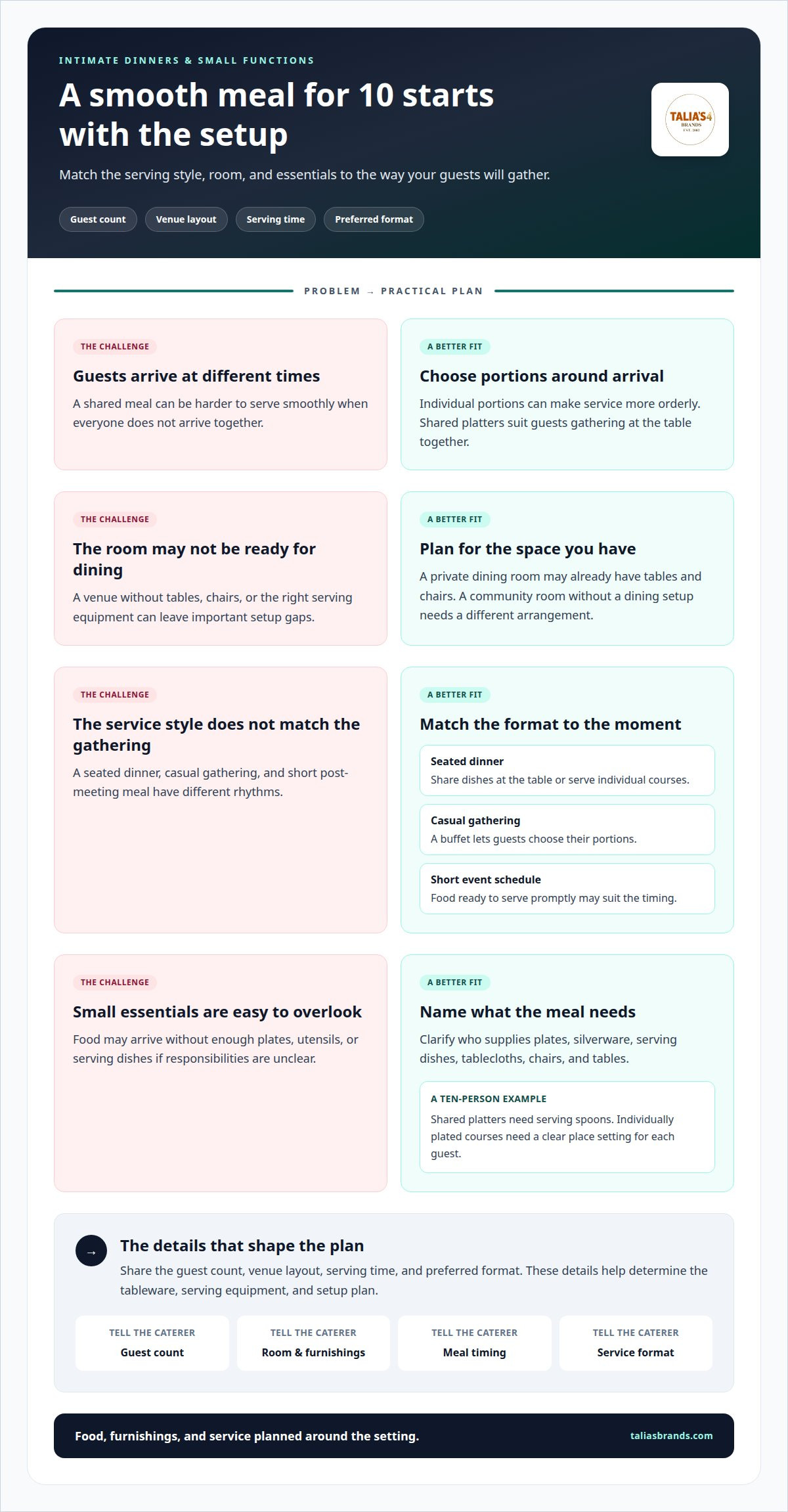
A ten-person dinner can feel composed without the machinery of a large reception. The caterer can shape service around the room, meal timing, and whether guests sit together or move between tables. For a family gathering, shared platters may encourage conversation; individual portions can make service more orderly when guests arrive at different times.
Disposable plates, serving equipment, and setup should be discussed as part of the catering arrangement. Clarify what the venue provides and what the meal service requires, including plates, silverware, serving dishes, tablecloths, chairs, and tables. Naming each item helps prevent a gap, such as food arriving for a seated dinner without enough serving utensils.
For a small function, the venue’s furnishings can shape the service plan. A private dining room with tables and chairs may need only tableware and serving dishes, while a community room without a dining setup calls for a different arrangement. Plan the meal service around the space and its practical needs.
Service style affects how food reaches guests. At a seated dinner, dishes can be shared at the table or served as individual courses. For a casual gathering, a buffet lets guests choose their portions. A short event schedule, such as a post-meeting meal, may suit food that is ready to serve promptly.
Share the guest count, venue layout, serving time, and preferred format when arranging small-event catering. Those details help determine the amount of tableware and serving equipment needed, along with the setup plan. For example, a ten-person meal using shared platters needs serving spoons, while individually plated courses call for a clear place setting for each guest.
For an intimate kosher function, on-site or off-site service can be planned around the setting and level of hospitality desired. A defined arrangement for food, furnishings, and setup gives hosts a clear view of what the event requires, without adding unnecessary complexity to a small gathering.
For a larger kosher event, preparation also matters: in the example 500-guest wedding, mashgichim must kasher 600 dinner forks and 600 dinner knives. Those quantities make utensil planning part of the arrangement, alongside the food, furnishings, and service format.
4. What menus and dietary options are available for small kosher catering orders?
A small kosher menu can include choices for vegetarian, vegan, and gluten-free guests. These needs should be part of the menu plan, not last-minute substitutions. For a gathering of ten, a clear guest count and meal format help the caterer plan suitable dishes and portions.
Dietary labels describe different needs. Vegetarian guests avoid meat, while vegan guests avoid animal products. Gluten-free requests concern ingredients containing gluten. One preference does not automatically meet another, so list each requirement separately when arranging the menu.
Consider how each option fits the whole meal. A vegetarian main course should have suitable sides, while a vegan guest may need a complete meal without animal-derived ingredients. Gluten-free guests need appropriate choices across the courses, not only a main dish. Clear menu descriptions help hosts understand which dishes suit each guest.
Share dietary requirements alongside the occasion, guest count, and serving style. If one guest needs a vegan meal and another requests gluten-free food, state both needs distinctly. Include any ingredient concerns guests have shared rather than assuming a broad label covers every restriction.
Kosher observance is separate from vegetarian, vegan, or gluten-free preferences. The menu should suit guests’ kosher requirements as well as their dietary needs. For a Shabbat gathering, a prepaid Shabbat menu can shape the occasion; share the group’s specific meal requirements when arranging it.
For a small order, a concise list of guest needs can guide a coherent menu without making every dish different. Plan a kosher menu for your gathering with the occasion and dietary requirements in mind.
When reviewing the order, hosts should ask caterers to provide some vegetarian, vegan, or gluten-free meals. Make the request directly and identify which options are needed. This gives the caterer a clear request for the order. Hosts can refer to the dietary needs already identified when asking, keeping the request focused on suitable meals. The request can cover vegetarian, vegan, and gluten-free options as appropriate for the gathering, without assuming that one kind of meal addresses every preference.
TALIA'S Brands: On and Off-Site Catering
TALIA'S Brands offers on- and off-site catering for groups of 10 to 100 or more. For a small dinner, choose off-site catering when you want prepared food without on-site service. On-site catering suits gatherings where service at the event is part of the plan.
Match the menu to the occasion and style of your gathering. TALIA'S, West Side Wok, and Shawarma Shabazi offer distinct culinary directions, from an elegant dinner to a more casual meal. Share your guest count, event format, and dietary needs to shape a catering plan for your New York gathering.
For kosher catering for 10 people, TALIA'S Brands can help bring the meal and service approach together for an intimate gathering or small function. Contact TALIA'S Brands to discuss catering for your event.
Plan a Meal That Fits Your Gathering
A small event can feel considered without becoming complicated. Decide what should define the experience: a relaxed shared meal, a formal dinner, or a celebration with a distinct culinary character. That choice gives the catering plan a clear starting point and helps the menu feel intentional for every guest.
For kosher catering for 10 people, keep the next step simple. Bring together the occasion, preferred service style, guest count, and dietary needs. TALIA'S, West Side Wok, and Shawarma Shabazi offer different culinary directions to consider as you shape the gathering. The right choice is the one that suits the people around your table and the atmosphere you want to create.
With the essential details in hand, you can move from planning to a meal that welcomes your guests. Contact TALIA'S Brands to discuss catering for your gathering, and take the next step toward hosting with confidence.
Frequently Asked Questions
What details should I confirm when ordering kosher catering for 10 people?
Confirm the event date, New York venue address, serving time, and exact guest count. Ask for a written order summary naming the selected dishes and quantities. Include the name and phone number of the person receiving the order, along with building entry or drop-off instructions. Share the kosher supervision standard your guests require so the meal arrangement suits the gathering.


