

A welcoming family table and strict kosher observance can sit comfortably together. Kosher catering for family gatherings brings food prepared under Jewish dietary law to the occasion, with certified ingredients, supervised preparation, and clear separation between meat and dairy. The menu can suit different preferences while keeping the meal thoughtfully coordinated.
Planning a family gathering means balancing tradition, appetites, and practical details. Kosher-style food is not the same as certified kosher food, so it’s important to understand the supervision behind the meal as well as choose the dishes.
This guide explains what kosher catering involves and how to plan vegetarian, vegan, meat, deli, salad, dairy, and fish options. It also covers how menu structure, dietary needs, food labeling, and service format shape the gathering. Whether you’re planning a meat spread, a dairy menu, or a table with vegetarian and vegan choices, you’ll have a clearer basis for selecting food that welcomes the whole family.
Key Takeaways
- Understand what kosher supervision and certification mean when choosing food for a family gathering.
- Compare vegetarian and vegan menu options with meat, deli, salad, dairy, and fish selections to suit the occasion.
- Keep meat and dairy service separate, and account for guests’ dietary needs when planning the menu.
- Learn how professional on- and off-site catering can make hosting a family gathering more convenient.
What is kosher catering?
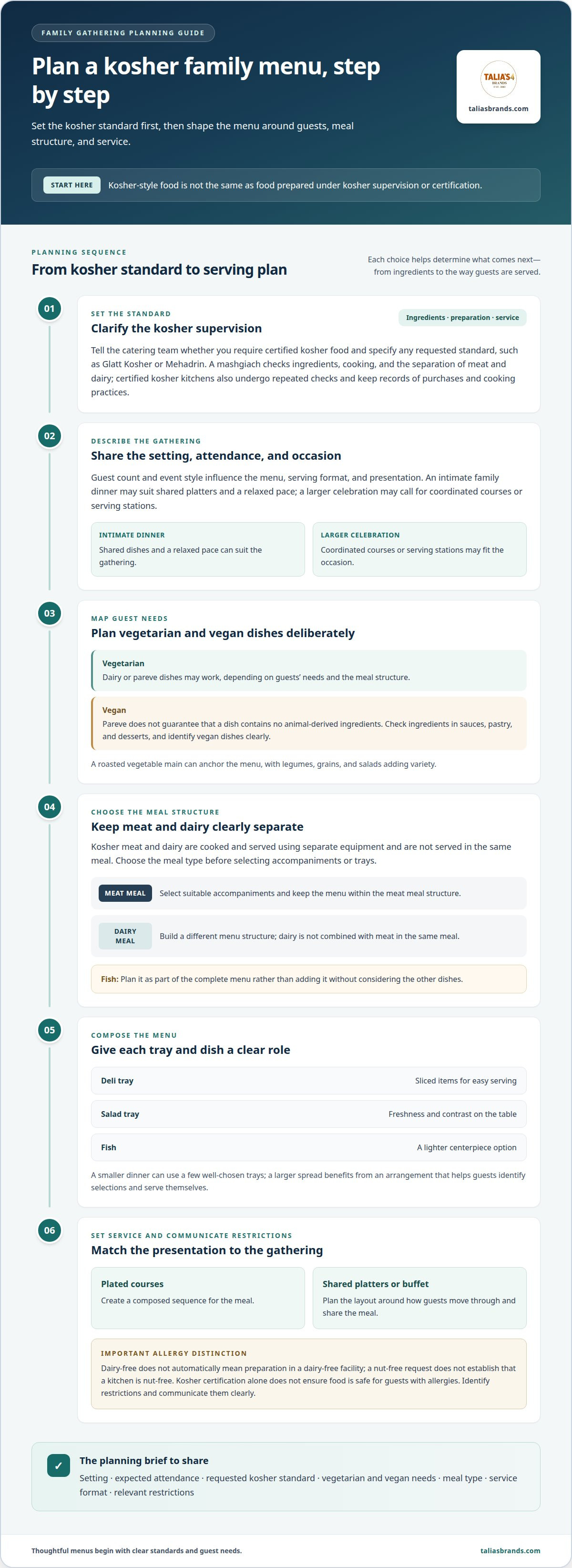
Kosher catering for family gatherings means preparing and serving food according to Jewish dietary law. The menu, ingredients, kitchen practices, and service must align with the requested kosher standard. A kosher-style meal may resemble certified kosher food, but the distinction is supervision or certification. For a New York family celebration, that standard shapes the menu from ingredient selection through preparation and service.
A mashgiach is a kashrut supervisor who checks ingredients, cooking, and the separation of meat and dairy. Certified kosher kitchens undergo repeated checks and keep records of purchases and cooking practices. Hosts seeking a particular standard, such as Glatt Kosher or Mehadrin, should specify it before booking. That choice guides which ingredients and preparation practices suit the gathering.
Guest count influences the menu, serving format, and presentation. An intimate family dinner may suit shared platters and a relaxed pace, while a larger celebration may call for coordinated courses or serving stations. A corporate gathering may have different needs from a family milestone. Guest count and event style both matter when choosing the cuisine and service format.
For a New York gathering, start by sharing the setting, expected attendance, service preference, and requested kosher standard with the catering team. These details help shape a practical plan, from dishes grouped by course to a layout that suits how guests move through the meal. A seated dinner and a buffet each call for different presentation choices.
A clear service plan helps family celebrations run smoothly. A milestone dinner might center on shared dishes, while a formal gathering may suit individually plated courses. On-site and off-site catering can accommodate different settings. The location, menu direction, and service style shape the arrangement, so the meal feels considered from the first course to the final presentation.
Menus for vegetarian and vegan guests
A vegetarian menu can still feel abundant and carefully composed. Dairy or pareve options may suit vegetarian guests, depending on their needs and the event’s meal structure. A dairy menu might bring together a savory tart, fresh salads, and a plated dessert. A pareve menu offers another approach, with dishes prepared without meat or dairy. Choose the format that works with the rest of the menu.
Vegan guests need a distinct plan. Pareve describes a kosher food category, not a guarantee that a dish contains no animal-derived ingredients. A vegan menu therefore requires deliberate ingredient choices, including in sauces, pastry, and desserts. Identify vegan dishes clearly and give them the same considered presentation as the other courses.
Cuisine style can shape the meal while keeping its kosher framework in view. A family celebration might pair vegetable-forward starters with hearty grain dishes and seasonal salads. Plated service creates a composed sequence, while shared platters make the meal feel more communal. Let the occasion, service style, and guests’ preferences guide the choices.
Start customization with a useful brief: note vegetarian and vegan guests, preferred cuisine, service format, and dishes tied to family tradition. The catering team can use those details to shape a menu with distinct courses rather than relying on a single substitute entrée. A roasted vegetable main, for example, can anchor the meal, with legumes, grains, and salads adding variety.
Scratch-made preparation can support a menu tailored to the occasion, especially when sauces, sides, and desserts need to follow specific dietary preferences. The menu should make each dish’s role clear, so guests can choose confidently. For a Shabbat gathering, Shabbat menu options can help frame a traditional meal around the family’s preferences.
Meat, deli, salad, dairy, and fish trays
A tray menu can make an intimate family dinner feel generous while keeping service simple. Meat selections might anchor the meal, with deli items, salads, or fish adding variety. The balance depends on the occasion, serving style, and guests’ preferences. For a Shabbat gathering, a prepared menu can bring the courses together without making every dish compete for attention.
Kosher meat and dairy are cooked and served using separate equipment and aren’t served in the same meal. That distinction affects the full menu, not just the main course. A meat meal calls for suitable accompaniments, while a dairy meal follows a different structure. Fish may offer another choice, but it should be planned as part of the complete menu, not added without considering the other dishes.
Build a tray selection around clear roles. A deli tray offers sliced items for easy serving; a salad tray brings freshness and contrast; fish can provide a lighter centerpiece. For a larger spread, arrange dishes so guests can identify each selection and serve themselves easily. For a smaller dinner, a few well-chosen trays can create a more focused presentation.
Dairy-free and nut-free requests need careful distinction. A dairy-free menu does not automatically mean the food is prepared in a dairy-free facility, and a nut-free request does not establish that a kitchen is nut-free. Kosher certification alone does not ensure food is safe for guests with allergies. Identify relevant restrictions and communicate them clearly as part of the catering details.
For a family celebration, organize the menu around the selected meal type, tray mix, and presentation. A meat-based dinner might pair deli selections with salads; a dairy menu could include fish and accompanying dishes. These choices help make the table cohesive while respecting kosher separation. Choose the meal structure first, then select trays that fit it.
What are the food safety and allergy considerations for kosher family catering?
Kosher certification addresses adherence to kosher standards, but it does not by itself ensure food is safe for guests with allergies. A meal can meet kosher requirements and still contain an ingredient that triggers an allergic reaction. Identify allergies and dietary restrictions separately from kosher preferences during menu planning. A guest may need a nut-free dish while also observing a specific kosher standard. Treat both needs as essential parts of the catering brief.
Ask guests about allergies and dietary restrictions before finalizing the menu. Share the details with the catering team, including the ingredient involved and the dishes guests are considering. A request for a dairy-free dish, for example, differs from a milk allergy. Likewise, explain a nut allergy clearly rather than relying on a menu change alone. This information helps the team plan dishes and describe their ingredients accurately.
Labels help guests identify what is being served. According to the European Commission, all food and drink served should be properly labelled, including allergens. At a buffet with meat, fish, salads, and desserts, clear labels help guests distinguish dishes and review relevant allergen information before serving themselves. Place each label beside its dish and keep it readable as the table is arranged.
Keep kosher meal categories clear while addressing allergy information as a separate concern. A meat-and-dairy distinction doesn’t identify every allergen, and a dairy-free menu doesn’t establish that a dish is free from other allergens. The catering plan should account for the requested kosher standard, selected dishes, and guests’ disclosed needs. For a family gathering, plan your catered event with those details in view, so menu choices and food information are considered together.
TALIA'S Brands: On and Off-Site Catering
TALIA'S Brands offers on- and off-site catering for family meals, celebrations, and other gatherings. Its catering serves groups of 10 to 100 or more, with the event setting shaping the service plan. For a family hosting at home, off-site catering brings the meal to the gathering; on-site catering serves events held at a chosen location.
For a family meal, TALIA'S offers Glatt Kosher dining, prime rib, and a variety of Mediterranean and Middle Eastern specialties like shawarma, falafel, sabich, and schnitzel. These distinct menu directions can help hosts match the meal to the occasion, from a traditional family dinner to a more casual spread.
Share the gathering’s setting, guest count, preferred menu direction, and dietary needs when planning. To discuss catering for your family gathering, contact TALIA'S Brands.
Shape the Gathering Around Your Guests
Turn your family’s priorities into a clear catering brief. Decide what atmosphere you want at the table, then consider the meal style that supports it. A relaxed gathering may call for a different rhythm than a formal celebration. Include dietary needs and family traditions early, so the menu serves the occasion rather than simply filling the table.
For kosher catering for family gatherings, a broad culinary range can help make the menu personal. TALIA'S Brands brings together TALIA'S, West Side Wok, and Shawarma Shabazi, giving hosts distinct directions to consider. Choose the style that feels right for your guests, then share the setting and preferences as you plan.
Contact TALIA'S Brands to plan catering. A thoughtful menu can make the meal feel distinctly yours and leave more room to enjoy the gathering.
Frequently Asked Questions
Can you accommodate special dietary needs within kosher guidelines?
Include dietary needs in the menu brief alongside the requested kosher standard. Distinguish a preference, such as vegan dining, from an allergy, such as a severe nut allergy. Specify which guest is affected and which ingredients must be avoided, so the catering team has clear information to address each need separately.
Do you do tastings?
A tasting can help hosts assess flavor and presentation, but it isn’t the only way to shape a menu. Begin by identifying the event’s cuisine, service style, and dietary priorities. A host choosing a family-style meal, for example, can focus on how the menu works together and suits the occasion. This gives the planning conversation a clear direction before dishes are selected.
What can a kosher menu look like?
A kosher menu can reflect different culinary styles while following its selected meal structure. A New York family gathering might choose a traditional dinner, Chinese cuisine, Middle Eastern dishes, or sushi. The event’s atmosphere and guests’ preferences help determine the direction. Organize the menu by course or serving style, with choices that work well together.
What should you ask before you book?
For kosher catering for family gatherings, begin with the details that shape the service: the event date, setting, expected guest count, meal style, and requested kosher standard. Share dietary restrictions and allergies separately, then clarify whether you need on-site or off-site catering. A concise brief helps the catering team understand the occasion and plan the service.
What kosher supervision levels and certifications should I compare?
Compare the kosher standard your household observes with the certification governing the catering. All four brands, TALIA'S, Shawarma Shabazi, West Side Wok, and Konata Sushi Bar, are under the strict Glatt Kosher supervision of Mehadrin Kashrut, led by Rabbi Avrohom Marmorstein. If family members follow different standards, establish which one will guide the event before settling the menu. This helps keep expectations consistent across the gathering.
What menu options suit different family gathering sizes and age groups?
Choose a format that suits the room and the way guests will eat. A seated family meal can follow a course-based rhythm, while a gathering with children moving between activities may work better with easy-to-serve dishes. For a mixed-age group, balance familiar selections with options for adults seeking a more distinctive meal. Let the setting and pace guide the final arrangement.


