
A private event should feel effortless, with a considered menu and kosher standards cared for together. Off-site kosher catering in NYC brings the meal to your gathering, with catering for groups of 10 to 100 or more and menus spanning Glatt Kosher dining, Chinese cuisine, shawarma, and sushi.
Choosing an off-site catering style means shaping the meal around your occasion, guests, and venue. Start with the cuisine and service format, then consider dietary needs and the setting. Thoughtful planning begins with what guests can eat and the atmosphere you want to create.
This guide explains how off-site kosher catering in NYC is planned, how to choose a menu direction, and what event details help coordinate the meal. From the schedule and venue to guest needs and service style, clear information helps the catering team plan a welcoming experience.
Key Takeaways
- Share the event format, setting, and guest needs early to shape a service plan that fits the occasion.
- Account for dietary requirements when selecting dishes, so the menu feels welcoming and considered for every guest.
- Choose a catering style that suits the gathering, from an intimate private meal to a larger celebration.
- Explore distinct kosher cuisine options and off-site catering from TALIA'S Brands when planning your event.
Event planning and service process
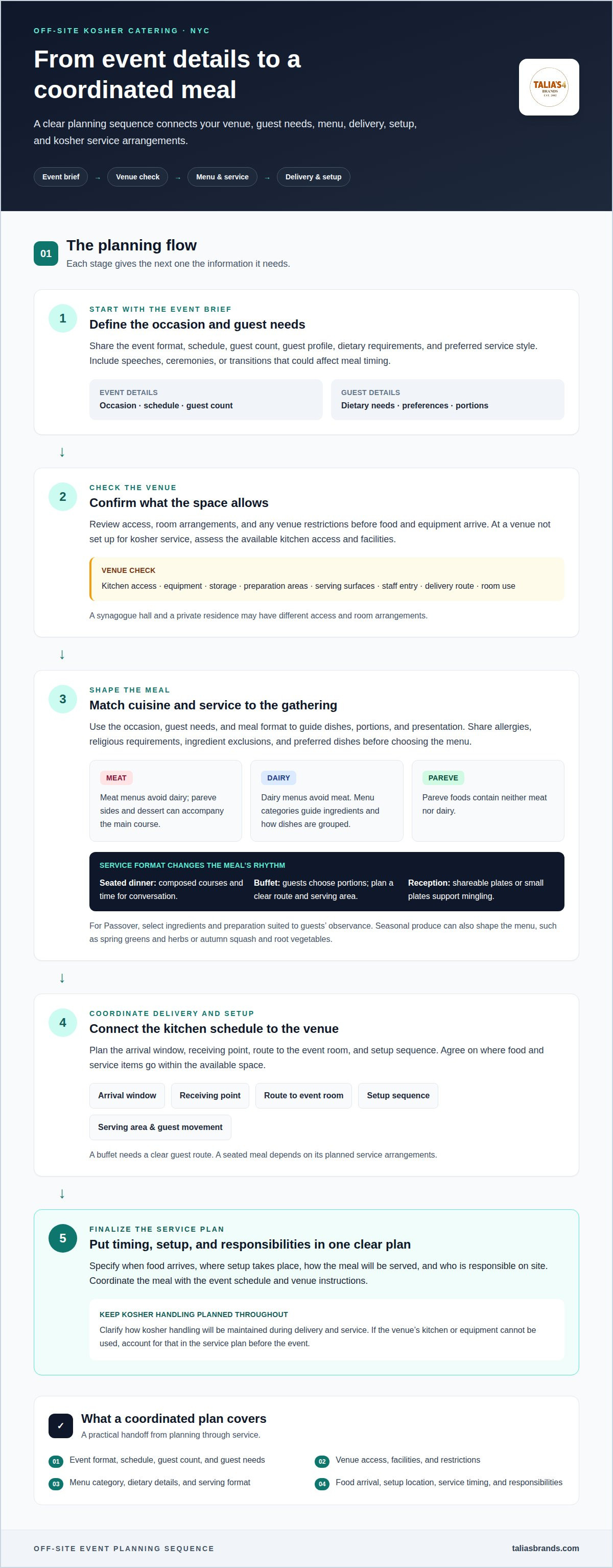
Off-site planning starts with the venue, event format, guest needs, and service style. Each detail helps shape the menu, delivery, setup, and kosher arrangements.
Full-Service Event Catering
A catering plan coordinates the meal with the event schedule and venue. It can set out the menu, delivery timing, setup, serving format, and responsibilities on site. For a Park East Synagogue reception, for example, the plan would account for the room, guest flow, and meal timing. These details help the service suit the setting.
Before the event, the catering team organizes the agreed details into a clear service plan. Share the schedule, guest count, and venue instructions. The most useful plan specifies when food arrives, where setup takes place, and how the meal will be served.
Delivery and Event Setup
Delivery planning connects the kitchen schedule with the venue’s access arrangements. The team coordinates the arrival window, receiving point, route to the event room, and setup sequence. A synagogue hall may have different access and room arrangements from a private residence. Sharing those details early helps keep setup aligned with the event schedule.
Setup covers where food and service items go within the agreed space. The plan should account for the serving area, guest movement, and venue restrictions. A buffet needs a clear route for guests, while a seated meal depends on the planned service arrangements. These choices affect timing and how smoothly guests are served.
Off-Site Venue Considerations
At a venue not set up for kosher service, the catering team assesses kitchen access, equipment, storage, preparation areas, and serving surfaces. Venue rules may limit staff entry, room use, or delivery routes. These restrictions shape the plan, so agree on workable arrangements before food and equipment arrive.
The catering team also plans how kosher handling will be maintained throughout delivery and service. If the venue’s kitchen or equipment cannot be used, the service plan must account for that. Clarifying access, storage, and setup responsibilities in advance helps maintain the agreed standards and avoid disruption.
Customized menus and dietary needs
A tailored menu starts with guest needs, the event’s tone, and the meal format. Share dietary restrictions, ingredient exclusions, and preferred dishes before choosing the menu. A seated dinner may suit composed courses, while a reception can work well with shareable plates. The format helps determine how dishes are portioned and presented.
Kosher menu planning distinguishes meat, dairy, and pareve dishes. Meat menus avoid dairy, dairy menus avoid meat, and pareve foods contain neither meat nor dairy. These categories guide ingredients and how dishes are grouped. For example, a meat meal can pair its main course with pareve sides and dessert.
Passover calls for a distinct menu, with ingredients and preparation suited to guests’ observance. Guests may follow different standards, so share their needs when selecting dishes. This can affect staples, sauces, desserts, and how menu choices are described. Clear details help prevent confusion before the event.
Seasonal menus can put fresh produce at the center of a meal. A spring menu might feature greens and herbs, while autumn can inspire roasted squash and root vegetables. Choose ingredients that complement the main dishes and sides. Seasonal choices add color and texture while keeping dietary requirements in view.
Customization works best when requests become clear menu decisions. Group needs as allergies, religious requirements, ingredient preferences, or children’s portions. For a mixed group, a menu might include a meat entrée, pareve sides, and a separate dairy-free dessert. Each choice should fit the meal’s kosher category.
Shape the menu around the gathering. A family celebration may call for familiar dishes and generous shared platters. A business reception may suit selections that are easy to enjoy while guests converse. Aligning cuisine, service format, and guest needs creates a cohesive meal.
Catering for private and special occasions
A private dinner, wedding reception, anniversary, or family milestone each calls for a distinct catering rhythm. A seated dinner gives guests time for courses and conversation; a reception favors compact portions and easy movement. For a New York City gathering, the occasion helps determine the menu’s tone, presentation, and pace.
Begin with the occasion and schedule. A family celebration may center on a shared meal, while a corporate reception may need food served around speeches. Align course timing with the event program rather than interrupting it. A clear timeline also helps coordinate arrival, service, and clearing.
Consider how guests will interact with the food. A buffet can suit an informal gathering where guests choose their portions. Plated service can give a formal dinner a structured pace, while small plates let guests mingle at a cocktail-style reception. Each format changes the number and placement of serving points.
Traditions and guest expectations also shape special occasions. A wedding meal may call for a celebratory menu and formal sequence; a birthday dinner may feel more personal with familiar dishes and shared platters. For a memorial gathering, a restrained presentation can keep attention on family and remembrance. Let the event’s character guide the choices.
To plan effectively, the catering team needs the event date, venue, schedule, guest profile, and preferred service style. Also outline speeches, ceremonies, or transitions that affect meal timing. These details help coordinate food service with the occasion, whether guests gather for a private dinner or a larger reception.
Venue conditions influence the final plan. A residence may have limited serving space, while an event room may support a buffet or seated layout. The catering team can shape delivery, setup, and service around the chosen format. Matching these practical details to the occasion helps the meal feel considered from arrival through the final course.
Kosher catering in New York City
Off-site kosher catering in NYC depends on more than menu selection. Certification, supervision, food handling, and venue arrangements all shape a dependable event plan.
Off-Site Caterer Ratings
Ratings can reveal patterns in a caterer’s event service, but a score alone offers limited context. Read comments about delivery, setup, communication, and meal service. A review about a synagogue reception may be more relevant than one focused on restaurant dining. Look for details that match your event format and priorities.
Consider ratings alongside service details. A review cannot establish a caterer’s kosher supervision or explain venue procedures. Ask for clear information about both.
Certifications and Supervision
Kosher supervision varies by authority, so no single label describes every NYC kosher caterer. TALIA'S Brands’ four brands are under the strict Glatt Kosher supervision of Mehadrin Kashrut, led by Rabbi Avrohom Marmorstein. For an event, look for the supervising authority and understand how its supervision applies to the catered food.
Clarify how kosher supervision applies to preparation, transport, and service at the event. The catering team can explain who oversees the standards and how the event arrangements fit them.
Certification and Food-Handling Checks
Before booking, review the caterer’s certification details and clarify which authority supervises the food. Discuss how food is protected during preparation, packing, delivery, setup, and service. For example, the plan should explain how separate menu categories remain identifiable during service.
The venue also needs to support the agreed arrangements. Discuss kitchen access, available equipment, storage, preparation surfaces, and limits on staff access. A venue’s kitchen practices may affect which spaces and equipment the catering team can use. These details help determine a workable kosher setup.
For an NYC event, explore off-site catering options and consider how the service plan fits your venue and kosher requirements.
TALIA'S Brands: On and Off-Site Catering
TALIA'S Brands offers on and off-site catering for private events, bringing a coordinated kosher meal to your gathering. Turn to the catering team when you need a menu and service plan shaped around the occasion, guest preferences, and venue arrangements.
TALIA'S Brands offers diverse menu directions through multiple concepts tailored to your tastes. Share the occasion, preferred cuisine, dietary needs, and schedule to guide planning. The catering team can align these details with the service style and venue setup to deliver exceptional off site kosher catering NYC.
For an intimate celebration or larger private event, begin with the essentials: where guests will gather, how the meal should be served, and what they need to enjoy it. Contact TALIA'S Brands to discuss off-site catering for your event.
Shape a Meal Around Your Gathering
Turn the event’s character into a clear catering brief. Consider the atmosphere you want guests to experience, then choose a cuisine and service style to support it. For private celebrations, off-site kosher catering in NYC brings a considered meal to your chosen setting.
TALIA'S Brands offers distinct menu directions through TALIA'S, West Side Wok, and Shawarma Shabazi. Each gives you a different starting point for matching the meal to your gathering. Share the occasion, preferred cuisine, venue details, and guest needs to begin planning a service that feels considered from the first course onward.
Contact TALIA'S Brands to plan your event. A thoughtful menu can help make your next gathering welcoming, memorable, and distinctly your own.
Frequently Asked Questions
Which service styles do you offer?
TALIA'S Brands offers on-site and off-site catering for private and corporate events. Choose among four concepts: TALIA'S, West Side Wok, Shawarma Shabazi, and Konata Sushi Bar. For example, Konata Sushi Bar offers a Japanese-inspired direction, while Shawarma Shabazi features Middle Eastern street food. The setting and guest preferences help guide the selection.
What off-site kosher catering services are available in NYC?
Off-site kosher catering in NYC can bring a catered meal to a private or corporate gathering. TALIA'S Brands offers off-premises catering for groups of 10 to 100 or more, with menu choices across its four restaurant brands. A private dinner might center on TALIA'S, while a gathering seeking sushi can consider Konata Sushi Bar. The menu direction can reflect the event and its guests.
Do NYC kosher caterers offer delivery, setup, staffing, and rentals at outside venues?
Catering arrangements depend on the event plan. Catering does not include venue rental, and TALIA'S Brands offers catering rather than event venue rental. For an outside event, distinguish meal service from venue arrangements. Clarify which parts of the event are covered, such as food delivery or setup, without assuming staffing or rentals are included.
How far in advance should I book an off-site kosher caterer in NYC?
Start planning once you know the event date and venue, then share the schedule, guest count, and menu needs. These details shape the catering plan and coordination. A celebration with a fixed program or specific dietary requests may need more planning than a simple meal. Planning ahead gives the team time to align the event details.
What kosher requirements must an NYC venue meet for catered events?
The catering team assesses kitchen access, equipment, storage, preparation areas, and serving surfaces, along with venue rules for staff entry and deliveries. The plan explains how kosher handling will be maintained. If the kitchen or equipment cannot be used, the arrangements must account for that limitation.


