

Specialty rolls bring more to the table than fish and rice, but the sauce question deserves its own attention. For kosher sushi rolls in NYC, a Glatt Kosher designation and a sauce’s Chalav Yisrael status are distinct details. The menu’s ingredients and preparation matter, too.
It’s natural to want an appealing selection and clarity about kosher standards. This guide looks at specialty rolls, fish and vegetable platters, and Asian-inspired options, while explaining how to think about the separate question of whether a sauce meets Chalav Yisrael standards.
Expect a closer look at the flavors and combinations that make specialty rolls distinctive, alongside practical context for choosing a platter or Asian-inspired dish. The aim is a clear picture of the menu, with the sauce question kept in focus rather than lost among the options.
Key Takeaways
- Learn how to compare specialty rolls by their ingredients, textures, and finishing touches.
- See what to consider when choosing between fish and vegetable sushi platters for a meal or gathering.
- Understand why a restaurant’s kosher status and a sauce’s Chalav Yisrael status are separate details.
- Explore Konata Sushi Bar as a destination for sushi, specialty rolls, and poke bowls.
Sushi and Asian-inspired menu options
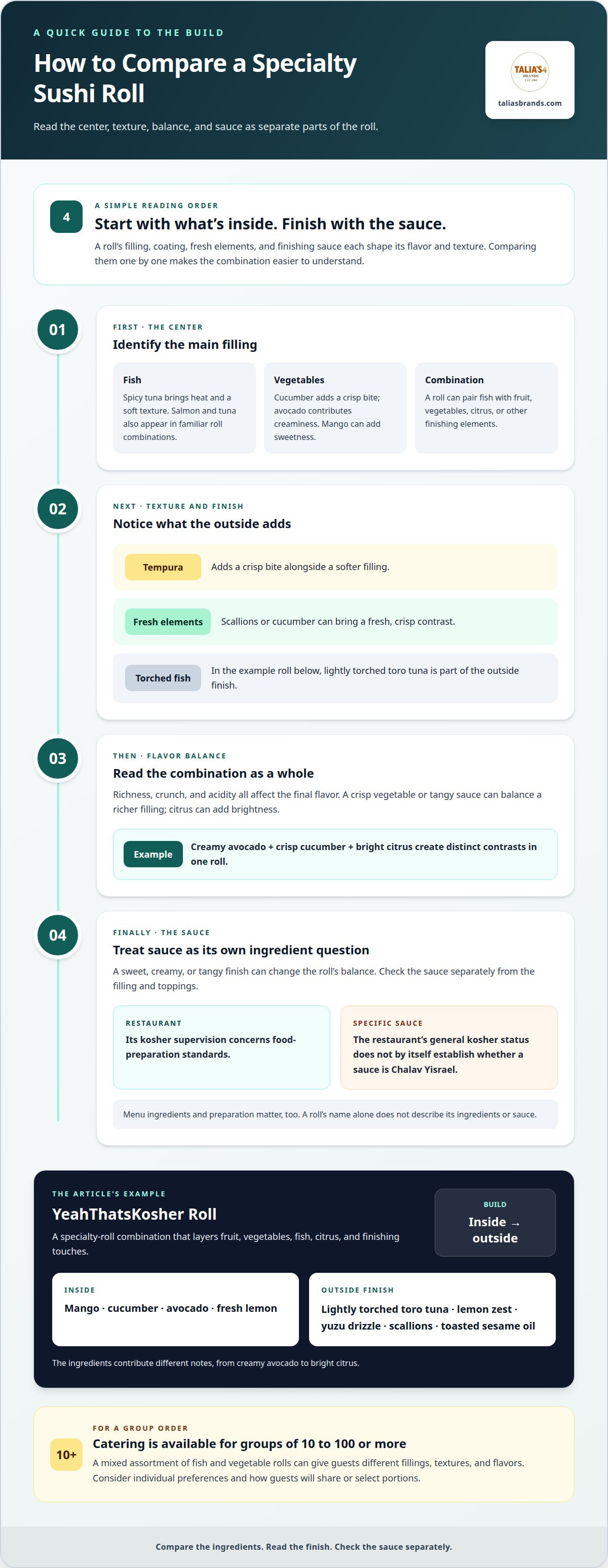
Look beyond familiar salmon and spicy salmon combinations. A specialty roll can balance fruit, crisp vegetables, rich fish, citrus, and a finishing sauce. One example, the YeahThatsKosher Roll, pairs mango, cucumber, avocado, and fresh lemon inside. Lightly torched toro tuna, lemon zest, yuzu drizzle, scallions, and toasted sesame oil finish the outside. Each ingredient contributes a distinct flavor, from creamy avocado to bright citrus.
Vegetarian sushi offers another way to explore the menu. Cucumber and avocado provide contrasting crisp and creamy textures, while mango adds sweetness. Review the full list of ingredients if you want to avoid fish or a particular item. For kosher sushi rolls in NYC, ingredient details matter alongside the restaurant’s kosher standards, especially when sauces or mixed preparations are involved.
New York City has kosher sushi options in Manhattan, Brooklyn, and Queens. To narrow your search, start with the borough and neighborhood that suit your plans, then compare menus and kosher supervision. A restaurant’s location alone doesn’t establish its kosher status or tell you what its menu includes.
Dine-in, takeout, and delivery each suit different plans. Check the restaurant’s ordering options to see which format it offers. Consider timing and presentation, too: a platter for sharing at a table may be packed differently from individual rolls for takeaway.
Cross-contamination prevention depends on controlled ingredients and preparation. A kosher kitchen separates approved ingredients from non-kosher ones, uses clean preparation areas and utensils, and follows its kashrut supervision procedures. Sauces deserve particular attention because their ingredients can differ; a restaurant’s general kosher status doesn’t by itself answer whether a sauce is Chalav Yisrael.
Dry-aged and Wagyu steak are steak options, not sushi categories. If a menu offers sushi alongside steak, consider each dish separately rather than assuming one description applies to every item. For an Asian-inspired meal, compare a roll’s fish or vegetables, sauce, and preparation style to find the flavors and format that suit your table.
Specialty sushi rolls
A specialty roll creates contrast through its filling, coating, and finish. Spicy tuna brings heat and a soft texture; tempura adds a crisp bite. Cucumber, avocado, or a tangy sauce can balance either. Read the combination as a whole, since richness, crunch, and acidity shape the final flavor.
Manhattan restaurants don’t share one sushi menu. Familiar styles to look for include spicy tuna and tempura rolls, but fillings and sauces vary by kitchen. For kosher diners, both the restaurant’s kashrut standard and the roll’s ingredients matter. A name alone doesn’t tell you how a roll is prepared or what its sauce contains.
Compare rolls by their construction. First, consider the center: fish, vegetables, or a combination. Next, note whether the outside adds crispness, such as tempura, or a fresh element, such as scallions. Finally, consider the sauce. A sweet or creamy finish can change the balance, so identify sauces separately from the main ingredients.
Can kosher sushi rolls be ordered for catering or larger groups in NYC? Yes. On- and off-site catering is available for groups of 10 to 100 or more. For a group order, choose a balance of fish and vegetable options, then plan how guests will share or select individual portions. A mixed assortment gives guests different textures and flavors without relying on one filling.
For a catered meal, make the selection around the occasion and the group’s preferences. Spicy tuna offers a bolder profile; vegetable rolls provide a fish-free alternative. Catering for group meals can bring specialty sushi into a shared setting.
Vegetable and fish sushi platters
A platter makes variety easy to share. Fish selections offer a savory center, while vegetable pieces bring freshness and crunch. Avocado contributes a creamy texture; cucumber adds a cool, crisp bite. Combining both styles gives guests a choice without making every piece taste alike.
For a vegetable-focused selection, look for rolls built around avocado, cucumber, or both. Their textures work well together, while other vegetables can add sweetness or a firmer bite. A simple roll lets the rice and filling remain prominent. Consider sauces and toppings separately when choosing pieces for guests with specific preferences.
Fish platters can balance richer and lighter bites. Salmon offers a fuller taste, while tuna can provide a firmer texture. A mix of plain fish rolls and more seasoned pieces creates contrast across the platter. If spicy salmon is included, place it alongside milder choices so guests can choose their preferred heat level.
For a group, decide whether the platter should lean toward fish, vegetables, or an even mix. Then consider who will share it and whether they prefer familiar combinations or bolder flavors. Pair recognizable choices such as cucumber and avocado rolls with fish selections. This makes the platter easier to navigate at a meal or reception.
Presentation affects how easily guests serve themselves. Arrange vegetable and fish pieces in distinct sections, or use clear labels when the assortment includes different fillings or sauces. Keep dipping sauces identifiable rather than treating them as interchangeable. This helps guests choose according to flavor, ingredients, or kosher observance.
Kosher status and specific ingredient questions are separate considerations. A restaurant’s supervision concerns its kosher food-preparation standards; it doesn’t automatically identify every sauce or describe each platter’s contents. Before selecting an assortment, distinguish fish rolls, vegetable rolls, toppings, and sauces.
What NYC sushi restaurants serve kosher sushi rolls?
In New York City, look for sushi restaurants whose kosher supervision covers the food they serve. A restaurant’s label alone may not answer every menu question. Consider the supervision standard, the dishes offered, and whether the restaurant provides the dining format you need.
For a practical comparison, start with the restaurant’s own menu. Look for familiar choices such as salmon rolls, spicy tuna, vegetable rolls, and specialty combinations. Then distinguish ingredients from sauces and toppings. This helps clarify what a roll contains without assuming every item follows the same recipe.
Kosher status and Chalav Yisrael refer to different considerations. A restaurant’s kosher supervision concerns its kosher operation. Chalav Yisrael is a particular dairy standard, so it matters when a sauce contains dairy ingredients. A sauce made without dairy raises a different ingredient question than a creamy dairy sauce.
Ordering format is another useful point of comparison. Some restaurants serve guests on-site, while others focus on takeout or delivery. A menu or ordering page can show which formats are available and whether the restaurant offers rolls, platters, or both. For delivery, packaging and travel time can affect how crisp toppings or tempura remain.
Before choosing a restaurant, follow three steps:
- Identify the kosher supervision stated for the restaurant.
- Review roll ingredients, sauces, and any dairy descriptions separately.
- Choose the dining or ordering format that suits the meal.
These checks make it easier to compare NYC options based on the food, not just the names. For specialty rolls, prioritize a menu that clearly describes the filling and finishing ingredients. If you’re planning a sushi meal, explore Konata Sushi Bar’s offerings and choose the style that suits your table.
TALIA'S Brands: Konata Sushi Bar
TALIA'S Brands brings specialty sushi to the Upper West Side through Konata Sushi Bar, which offers sushi, specialty rolls, and poke bowls. It’s a way to explore Japanese flavors within the group’s kosher dining portfolio. All four restaurant brands are certified Glatt Kosher under Mehadrin Kashrut, supervised by Rabbi Avrohom Marmorstein.
Choose Konata Sushi Bar when sushi is the centerpiece, whether you’re drawn to a composed specialty roll or a poke bowl. For a meal with varied tastes, TALIA'S, West Side Wok, and Shawarma Shabazi offer distinct dining options within the group. The right fit depends on the food you want and the experience you’re planning.
For sushi plans in New York City, contact TALIA'S Brands to discuss your order.
Make Your Next Meal a Thoughtful Choice
Choosing kosher sushi rolls in NYC can help shape a meal around your guests, setting, and appetite. Consider whether sushi will anchor the table or complement other dishes. That choice helps guide your order, from a focused sushi meal to a broader spread.
Konata Sushi Bar brings sushi and specialty rolls to TALIA'S Brands’ dining portfolio. For other dining preferences, TALIA'S, West Side Wok, and Shawarma Shabazi offer distinct options within the same hospitality group. Choose what suits your plans, then explore the menus or get in touch to discuss your order.
Contact TALIA'S Brands to take the next step. A well-chosen meal can make gathering around the table feel effortless and memorable.
Frequently Asked Questions
Are the sauces Chalav Yisrael?
Konata Sushi Bar’s Glatt Kosher supervision doesn’t by itself establish whether every sauce is Chalav Yisrael. TALIA'S Brands’ four restaurant brands operate under Mehadrin Kashrut, supervised by Rabbi Avrohom Marmorstein. Chalav Yisrael is a dairy-specific standard, so it applies to sauces containing dairy rather than every sauce. Consider a sauce’s dairy ingredients separately from the restaurant’s kosher certification.
Do you have vegetarian rolls?
Yes, vegetarian rolls are an option alongside fish sushi. Fillings such as avocado and cucumber offer contrasting creamy and crisp textures. For a shared order, combine vegetable-centered pieces with fish rolls to give guests a choice. If you avoid a specific ingredient, consider the full roll, including toppings and sauce, rather than relying on its name alone.
Is the sushi rice and tempura batter under the same certification as the fish?
Yes. Konata Sushi Bar operates under the same Glatt Kosher certification as the other TALIA'S Brands restaurant concepts, under Mehadrin Kashrut supervision by Rabbi Avrohom Marmorstein. The certification applies to the restaurant brand, not only its fish. That means rice and tempura batter are part of the certified sushi operation, rather than separate, uncertified offerings.
Is your sushi rolled to order?
Konata Sushi Bar serves freshly rolled sushi and specialty rolls. “Freshly rolled” describes the preparation, while “rolled to order” makes a more specific claim about when rolling begins. For pickup, use the current ordering details to plan your meal. Specialty rolls with several toppings may also differ in preparation from simpler rolls.
What kosher certification covers the sushi bar?
Konata Sushi Bar is certified Glatt Kosher under Mehadrin Kashrut, supervised by Rabbi Avrohom Marmorstein. This certification covers the sushi bar’s operation within TALIA'S Brands. For a specific ingredient question, such as whether a sauce contains dairy, distinguish that detail from the restaurant’s overall kosher certification.
When is the sushi bar open?
The after-midnight availability described for Glatt Kosher food shouldn’t be treated as Konata Sushi Bar’s schedule. It refers to the Glatt Kosher offering, not a stated sushi-bar opening time. For a dine-in or takeout order, use Konata Sushi Bar’s current operating and ordering details as your guide.


