

Kosher sabich in NYC brings together crisp-edged eggplant, potato, hard-boiled egg, tomato, pickles, tahini, and amba in pita. Traditionally, sabich is pareve, and the egg makes it vegetarian rather than vegan. Its appeal lies in the contrast: tender, savory fillings meet bright, tangy sauces.
Amba adds a tart, spiced note, while tahini brings a creamy, nutty finish. Sabich traces its roots to Iraqi Jewish Shabbat breakfasts, and the modern sandwich developed around Ramat Gan, near Tel Aviv. This guide covers the classic ingredients, the role of the sauces, and where to find kosher sabich in New York City. It also explores the story behind the name and what to look for when choosing a pita.
Key Takeaways
- Recognize the classic sabich balance of eggplant, egg, potato, fresh toppings, and contrasting sauces.
- Find a New York City option at Shawarma Shabazi, where sabich is part of the menu.
- Understand how Glatt kosher certification under Mehadrin Kashrut relates to the restaurant’s kosher standards.
- See why menu format and ingredients can shape the cost, without relying on a single citywide price.
Amba, tahini, and other sauces
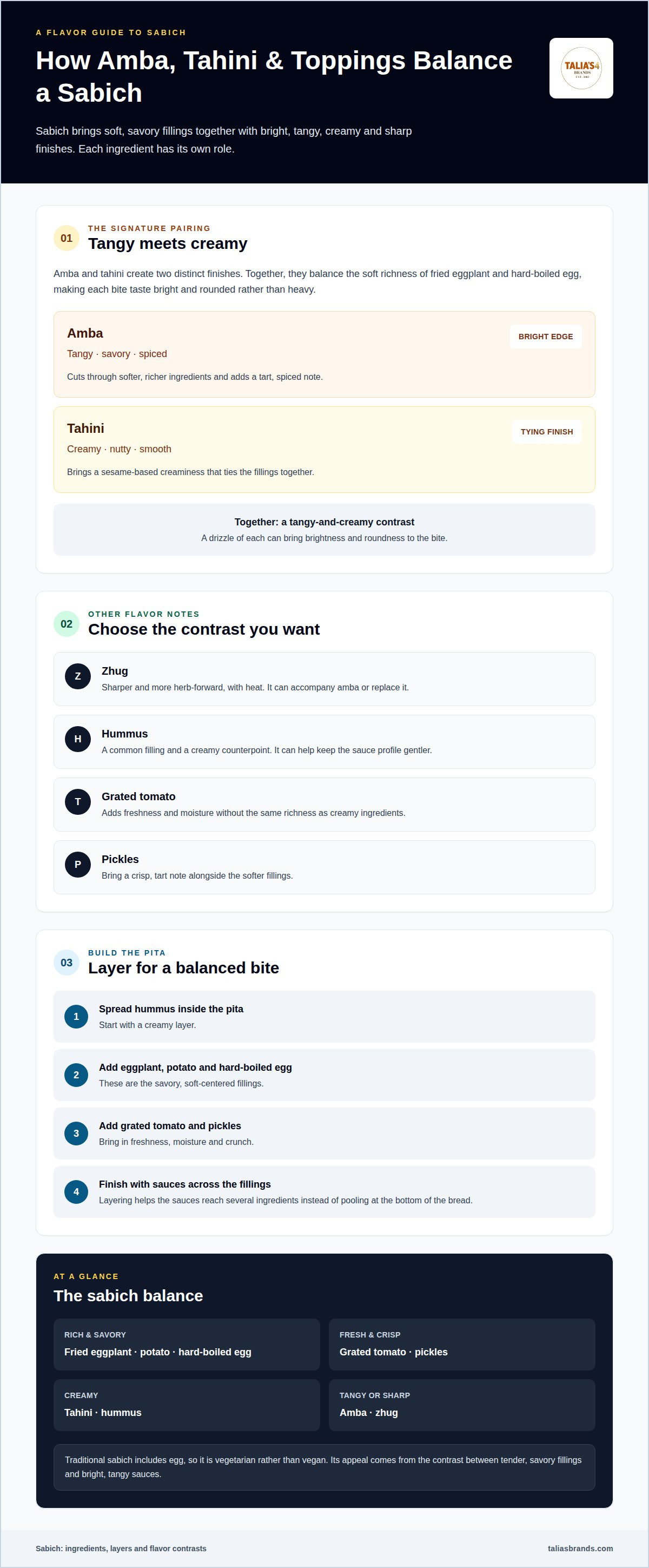
Amba and tahini give sabich two distinct finishes. Amba brings a tangy, savory edge; tahini adds a creamy, nutty quality. Together, they balance the soft richness of fried eggplant and hard-boiled egg. A drizzle of each can make a bite taste bright and rounded rather than heavy.
Layering matters. Spread hummus inside the pita, then add eggplant, potato, and hard-boiled egg. Grated tomato and pickles bring freshness and crunch, while amba cuts through the softer ingredients. Tahini ties the fillings together with a smooth, sesame-based contrast. This order helps the sauces reach several ingredients instead of pooling at the bottom of the bread.
Zhug offers a sharper, more herb-forward flavor. It can accompany amba or replace it, depending on the balance you want. Hummus is both a common filling and a creamy counterpoint, while grated tomato adds moisture without the same richness. Pickles contribute a crisp, tart note. Each ingredient plays a distinct role: creamy, tangy, fresh, or sharp.
For an Israeli-style sabich, choose the sauce combination by the contrast you want. Amba and tahini give the classic tangy-and-creamy pairing. Add zhug for extra herbal heat, or keep the sauce profile gentler with hummus and tomato. The traditional sandwich is pareve and includes egg, so it’s vegetarian but not vegan. Its sauces and other components belong to the full kosher preparation, not just the pita filling. In New York City, asking which sauces accompany the sabich can clarify the flavor profile before ordering, especially when you prefer less heat or more tang. A balanced combination lets the fried eggplant remain central while each condiment adds a distinct finish.
Where to find sabich in New York City
One New York City address for kosher sabich NYC is 668 Amsterdam Avenue, New York, NY 10025, home to TALIA'S Brands. Its location and service format help shape whether it suits a quick meal or a planned stop.
NYC Sabich Locations
This address places a sabich option on Amsterdam Avenue, in Manhattan’s Upper West Side. A specific address matters because the sandwich is not equally convenient across the city; your starting point and preferred way to eat can shape the best stop. The restaurant is primarily set up for takeout and delivery, with outdoor seating only and no wait service.
Weekday hours run from 11:00 AM to 1 AM. On Friday, service runs from 11:00 AM to 3 PM, while Saturday hours run from 6:00 PM to 3 AM. Those distinctions help with planning around the day, particularly for a Friday visit before Shabbat or a Saturday evening meal. The address gives you a concrete place to look for sabich without assuming every kosher restaurant serves it.
Reviews and Ratings
When comparing kosher sabich in NYC, star ratings alone may not tell you much about the sandwich: they reflect the overall restaurant experience. For a more useful comparison, look for comments that mention sabich specifically, including the eggplant texture, sauce balance, portion, and how well the pita holds together.
The order format also matters. For takeout or delivery, comments about packaging and whether the food arrives intact may be more relevant than remarks about table service. A review that describes crisp-edged eggplant or balanced amba offers more dish-specific insight than a general rating. Give greater weight to recent feedback about sabich itself when deciding whether the menu suits you.
For this address, the practical takeaway is clear: plan around its listed hours and expect an outdoor-seating-only setup with no wait service. The format suits a pickup or delivery plan more directly than a sit-down meal. Matching location, timing, and review details can make finding kosher sabich in NYC simpler and more predictable.
Are NYC sabich restaurants certified kosher, and by which kosher authority?
Kosher supervision varies by establishment, so check the certification that applies to the restaurant preparing your food. Shawarma Shabazi, along with the other three TALIA'S Brands restaurants, is certified Glatt Kosher under Mehadrin Kashrut, supervised by Rabbi Avrohom Marmorstein. This is the stated supervision for the group’s four brands.
The word “kosher” on a menu doesn’t identify the supervising authority. A restaurant’s stated certification information tells you who oversees the food and which establishment it covers. That is more informative than assuming a sabich is kosher because its ingredients seem suitable.
Sabich commonly combines eggplant, potato, hard-boiled egg, tomato, pickles, tahini, and amba. Those ingredients describe the dish, not the restaurant’s certification. Traditional sabich includes egg, making it vegetarian rather than vegan. Preparation and the establishment’s supervision also matter when assessing its kosher status.
- Authority: Identify the named kosher supervisor or organization.
- Establishment: Match the certification information to the restaurant preparing the sabich.
- Dish: Treat ingredients such as egg, tahini, and amba as menu details, not proof of certification.
Mehadrin Kashrut is the named authority supervising the Glatt Kosher certification across TALIA'S Brands. “Glatt Kosher” describes the certification, while the named authority identifies who supervises it. Together, these details explain both the standard and the supervising body.
When comparing kosher sabich in New York City, distinguish the restaurant’s certification from a general description of the sandwich. Check the stated supervising authority, then consider the menu ingredients separately. This keeps the dish’s traditional composition distinct from the kosher status of the place preparing it.
What are the prices for sabich in NYC?
Sabich menus and prices vary by restaurant, so there is no single citywide price. To compare servings, look at the listed ingredients and portion details: a pita with eggplant, potato, egg, fresh toppings, and sauces may differ from a smaller or differently composed option. Compare what each menu includes, not just the dish name.
For example, a sabich with hummus, pickles, tahini, and amba includes several distinct components. Menus may list sauces or sides separately, which affects what comes with the order. Read each item description closely and compare similar combinations. A sandwich listing may not include a drink or side.
The ordering method can also affect what you pay. Takeout, delivery, and dining in may involve different choices or charges. For delivery, review any fees shown alongside the food total. For pickup, compare the listed menu item and any additions you choose. These details can make two sabich orders differ in total, even when they share familiar ingredients.
- Ingredients: Compare the fillings and sauces named in each menu description.
- Portion: Check whether the listing describes a sandwich alone or a fuller meal.
- Additions: Account for optional sides or drinks separately.
- Ordering method: Consider delivery charges if you choose delivery.
Use each restaurant’s current menu as your reference, since prices are set by individual establishments rather than by a citywide standard. For a fair comparison, match the order type and similar ingredients. A sabich with eggplant, potato, egg, and sauces is most comparable to another with a similar build, not a smaller sandwich or a meal with extras.
Looking beyond one sandwich? Explore kosher dining options for more meal choices.
TALIA'S Brands
TALIA'S Brands offers a New York City option for kosher sabich: Shawarma Shabazi serves sabich alongside Middle Eastern street food, including shawarma, falafel, and schnitzel. All four restaurants are certified Glatt Kosher under Mehadrin Kashrut, supervised by Rabbi Avrohom Marmorstein. Diners can enjoy this Iraqi Jewish-inspired sandwich with the group’s stated kosher supervision.
For a different meal, the group also includes TALIA'S and Konata Sushi Bar. Each offers a distinct dining style under the same Glatt Kosher supervision.
Contact TALIA'S Brands to explore its dining options.
Make Your Next Meal a Thoughtful Choice
Choosing kosher sabich in NYC can be more than settling a craving. It can be a way to discover a meal shaped by heritage, careful preparation, and the balance of flavors you enjoy. Let your preferences guide the next step: a familiar favorite, a different cuisine, or a shared meal with varied tastes at the table.
TALIA'S Brands brings several dining options together, including TALIA'S, West Side Wok, and Shawarma Shabazi. That range offers a natural starting point when you’re considering what to enjoy next, whether sabich remains the draw or your plans call for another style of meal. Choose the experience that fits the occasion, then explore the menu at your own pace.
For help exploring the options, contact TALIA'S Brands today. A welcoming meal is a satisfying next step, and the right choice is ready to make your plans feel complete.
Frequently Asked Questions
What Is Sabich Made Of?
Sabich is usually served in pita with fried eggplant, potato, hard-boiled egg, tomato, pickles, tahini, and amba. Hummus is also common, while some versions include onion or zhug. The combination brings soft, savory fillings together with fresh, tangy toppings. Since it traditionally includes hard-boiled egg, sabich is vegetarian, but not vegan.
Where can I get kosher sabich in NYC?
Shawarma Shabazi serves sabich at 668 Amsterdam Avenue on Manhattan’s Upper West Side, between 92nd and 93rd Streets. The restaurant’s Middle Eastern street-food menu includes sabich alongside other dishes. Its brands are certified Glatt Kosher under Mehadrin Kashrut, supervised by Rabbi Avrohom Marmorstein. Takeout and delivery are practical options for enjoying a meal from this location.
Which NYC restaurants serve sabich and what are their addresses?
Shawarma Shabazi is the specific New York City restaurant identified here for sabich. Its address is 668 Amsterdam Avenue, New York, NY 10025, between 92nd and 93rd Streets on the Upper West Side. The restaurant is primarily arranged for takeout and delivery, with outdoor seating only and no wait service. That makes the address especially useful for planning pickup.
What comes in a typical sabich sandwich at NYC restaurants?
A typical sabich pita combines eggplant, potato, hard-boiled egg, and fresh toppings such as tomato and pickles. Hummus, tahini, and amba add creamy and tangy notes; some versions also include onion or zhug. The combination varies by menu, so review the item description if you prefer to avoid a particular sauce or topping.
Which NYC kosher sabich spots offer dine-in, takeout, or delivery?
Shawarma Shabazi is primarily set up for takeout and delivery. It has outdoor seating only and no wait service, so it isn’t a conventional sit-down restaurant experience. That distinction can help you choose an order format: pick up your meal, arrange delivery, or use the outdoor seating. The address is on Amsterdam Avenue on the Upper West Side.
What are the opening hours of NYC restaurants serving kosher sabich?
Shawarma Shabazi opens at 11:00 AM on weekdays and closes at 1 AM. On Fridays, it operates from 11:00 AM until 3 PM. Saturday service begins at 6:00 PM and ends at 3 AM. These hours offer a practical guide for weekday, Friday, and Saturday plans, especially if you’re timing a pickup or delivery order.


